
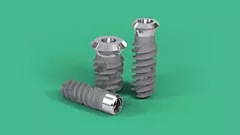










دعامات التئام سيراميكية من Straumann®

الخطوة الأولى نحو الالتئام المتجانس للأنسجة الرخوة.

تهيئ دعامات الالتئام السيراميكية من Straumann® الظروف المواتية لالتحام الأنسجة الرخوة، ومن ثم دعم توفير بيئة صحية للمنطقة المحيطة بالغرسة. علاوة على ذلك، تساعد مادتها المكونة من أكسيد الزركونيوم الجراحين واختصاصيي التقويم الراغبين في تقليل تراكم البلاك وتعزيز التئام الأنسجة الرخوة منذ يوم الجراحة.

دواعي الاستخدام الرئيسية
وحدة واحدة
التثبيت
المادة
ZrO2
مسار العمل
تقليدي
نظم الزراعة
BL | BLT
وصلات الغرسات
NC, RC
التحام جيد بالأنسجة الرخوة

بشكل عام، يكون التحام الأنسجة الرخوة حول أكسيد الزركونيوم أفضل منه حول التيتانيوم، وتكون الدورة الدموية شبيهة بما في حالة السن الطبيعية.1-2

مصممة لبيئة صحية في المنطقة المحيطة بالغرسة

يقل تراكم البلاك على أكسيد الزركونيوم بفضل سطحه الأنعم مقارنة بالتيتانيوم.2-3،‏8-9 

سهولة في الاستخدام

أمان ضد الامتصاص بفضل البرغي المدمج.
ترميز لوني لتحديد المنصة التركيبية الموافقة بوضوح.

مظهر جمالي منذ يوم الجراحة

دعامات سيراميكية لمرحلة التعافي. 
ترميم نهائي باستخدام خيارات سيراميك Straumann® Cares®.

الكتيّبات ومقاطع الفيديو

هل تبحث عن مزيد من المعلومات؟ يمكنك الاطلاع عليها في مركز التحميلات.

الأخبار المميزة على youTooth

اتصل بنا

اتفاقية استخدام البيانات*
يرجى إعادة كتابة الرمز الظاهر أعلاه.

التحميلات

الملفات

الفيديو والرسوم المتحركة

الدليل العلمي

الكتالوجات

المراجع

1 Kajiwara N, Masaki C, Mukaibo T, Kondo Y, Nakamoto T, Hosokawa R (2015). Soft tissue biological response to zirconia and metal implant abutments compared with natural tooth: microcirculation monitoring as a novel bioindicator. Implant Dent 24(1):37-41. 2 Degidi M, Artese L, Scarano A, Perrotti V, Gehrke P, Piattelli A. Inflammatory infiltrate, microvessel density, nitric oxide synthase expression, vascular endothelial growth factor expression, and proliferative activity in peri-implant soft tissues around titanium and zirconium oxide healing caps. J Periodontol. 2006 Jan;77(1):73-80. 3 Liñares A, Grize L, Muñoz F, Pippenger BE, Dard M, Domken O, Blanco-Carrión J. Histological assessment of hard and soft tissues surrounding a novel ceramic implant: a pilot study in the minipig. J Clin Periodontol. 2016 Jun;43(6):538-46.  4 Erbshäuser M., Zirconium dioxide dental implants in single-tooth gaps – An alternative to titanium? (Article in German). Implantologie Journal 11 | 2015, 32-36. 5 Welander M, Abrahamsson I, Berglundh T. The mucosal barrier at implant abutments of different materials. Clin Oral Implants Res. 2008 Jul;19(7):635-41. 6 Tetè S, Mastrangelo F, Bianchi A, Zizzari V, Scarano A. Collagen fiber orientation around machined titanium and zirconia dental implant necks: an animal study. Int J Oral Maxillofac Implants. 2009 Jan-Feb;24(1):52-8. 7 De Medeiros RA, Vechiato-Filho AJ, Pellizzer EP, Mazaro JV, dos Santos DM, Goiato MC (2013). Analysis of the peri-implant soft tissues in contact with zirconia abutments: an evidence-based literature review. J Contemp Dent Pract 14(3):567- 572. 8 S. Roehling, M. Astasov-Frauenhoffer, I. Hauser-Gerspach, O. Braissant, H. Engelhardt, T. Waltimo, M. Gahlert. In vitro biofilm formation on commercially available machined and micro-roughened titanium and zirconia implant surfaces. Clin. Oral Impl. Res. 26 (Suppl. 12), 2015. 9 Scarano A, Piattelli M, Caputi S, Favero GA, Piattelli A. Bacterial adhesion on commercially pure titanium and zirconium oxide disks: an in vivo human study. J Periodontol. 2004 Feb;75(2):292-6.