
What is it about?
- How the dental technician role has evolved in the last 10–15 years.
- What “great collaboration” between clinicians and labs looks like, day to day.
- Where AI, printing, and digital tools help now – and where human judgment still carries the case.
Craft stays the foundation even as everything turns digital
Vincent frames the last decade as a full reset: the workflow flips from analog routines to file-based production, yet the mission stays the same – deliver restorations that last, look natural, and respect biology. He stresses that technology increases the material and component complexity (materials, combinations, abutments, outlines), which makes the technician’s material literacy and restorative planning support even more valuable. In his view, high-end anterior and complex rehabilitations still demand hands-on finishing –surface texture, staining, glazing, and selective layering – to reach the level of excellence patients expect, even if they can’t name what they’re noticing.
Collaboration works when both sides learn each other’s world
Vincent credits his growth to deliberately listening “to the other side,” meaning he learns from clinicians, reads what they read, and even joins a journal club where he must present papers, not just observe. That mindset shapes his advice to younger technicians: build long-term partnerships with clinicians at a similar career stage, learn together at congresses, and apply concepts as a team. He also supports “eye-to-eye” collaboration without blurred boundaries – he’s happy to contribute diagnostics and restorative direction, but he doesn’t overstep into implant planning decisions that belong to the clinician. The result is mutual trust, clearer expectations, and fewer surprises when a case gets complex.
AI and printing accelerate workflows, but they raise a new risk
Vincent describes 3D printing as already indispensable for models, guides, appliances, prototypes, and provisionals – driven largely by the spread of intraoral scanning, which removes the “default” path back to plaster. He sees the next big leap as multicolor, high-strength ceramic or zirconia printing that respects dental “physiognomy” through layered strength and translucency, but he’s realistic that widespread lab adoption lags early breakthroughs. On AI, he highlights real gains in diagnostics, segmentation, planning, smile design, and early patient engagement – especially for visualizing outcomes fast and reducing the “abstract talk → mismatched expectations → repeated mockups” loop. His warning is sharp: if training drops morphology and function fundamentals, people may accept beautiful-looking AI outputs that fail in cleanability, guidance, or long-term function – so the future technician role shifts toward expert evaluation, not blind execution.
- Digital tools speed up communication, visualization, and production, but they don’t replace restorative judgment.
- The strongest clinician–lab teams learn each other’s constraints and build trust through long-term, peer-level partnership.
- The future belongs to technicians who can receive complex digital data, understand function, and improve AI outputs – not just accept them.
The Straumann ProTalk hosts
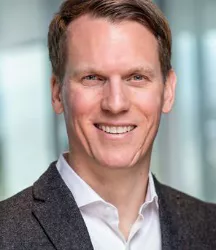
Andreas Utz: Global Head of Business Unit Implantology at Straumann Group. A leading expert in implant dentistry, Andreas brings a wealth of knowledge and a passion for innovation to the podcast.

Dr. George Raeber: Global Head of Research & Development and Innovation at Straumann Group. With his extensive experience in the dental industry, George offers unique insights and thought-provoking perspectives.