


Reading time: 10 minutes
What is this about?
- This article explains how today’s dental implant patient journey begins online and is shaped by digital research, emotions, and trust-building.
- It introduces the 7P Model, a structured framework to guide patient communication and reduce uncertainty before consultation.
- It shows how dental practices can use content for web and social media (SEO, AEO, GEO) to turn online engagement into patient confidence and treatment decisions.

A patient’s journey toward dental implant treatment rarely begins in the dental chair. More often, it begins quietly and privately: with a search, a question, a worry, a comparison, or a conversation prompted by something seen online.
A missing tooth may first be experienced as a functional problem. Chewing becomes uncomfortable. A bridge starts to fail. Dentures feel unstable. A smile no longer feels natural. But before the patient contacts a practice, the clinical problem has already become an emotional and informational journey. The patient wants to understand what is possible, what treatment might involve, how much it may cost, whether it will hurt, how long it will take, who they can trust, and whether people like them have gone through a similar experience.
Today, that journey is shaped by digital touchpoints at almost every stage. Patients search on Google, compare dental practice websites, read reviews, explore blog articles, watch videos, open newsletters, and scroll through social media profiles. According to the Digital 2025 Global Overview Report by We Are Social, Meltwater, and DataReportal, global social media user identities reached 5.24 billion at the start of 2025, equivalent to 63.9% of the world’s population. The typical internet user spends 2 hours and 21 minutes per day using social media [1].

Fig. 1: Social media usage today
For dental practices, this is not merely a media statistic. It is a patient access statistic. Your future implant patients are already online, often long before they are ready to book a consultation. They may not yet be looking for a specific implant system or a particular clinician. They are looking for clarity. They are looking for reassurance. They are looking for signals that a practice understands both the science of treatment and the human experience of becoming a patient.
That is why digital communication has become a trust layer for implant dentistry. Social media, websites, Google Business Profiles, blogs, newsletters, long-form video, and educational articles do not replace referrals, clinical excellence, or professional diagnosis. But they increasingly shape whether a patient feels confident enough to take the next step.
In this environment, implant-focused practices are not competing only on clinical capability. They are competing on how clearly, consistently, and credibly they communicate that capability.
From content overload to patient-centric structure
The dental category is not suffering from a lack of content. It is suffering from a lack of useful structure.
Recent academic studies reveal a consistent story: dentistry is already highly visible on social media, but much of the available content is promotional, image-heavy, and weak in educational value. A large-scale content analysis of implant-related hashtags on Instagram identified more than 4.5 million implant-related posts, yet only 27.8% of the content shared clinical facts [2]. Another study examining implant-related Instagram posts found that dental professionals, practices, or clinics created the majority of posts, but only 9.5% were educational, and most were rated poor in educational quality [3].
This matters because patients are not passive observers. In a web-based questionnaire study, 41.4% of respondents reported visiting dental practice social media, 23.5% used social media when changing dental practice, and among those who did, 85.6% said it influenced their decision [5]. Other research suggests that social media can influence how patients perceive dental implant treatment, including their views on comments, implant brand signals, treatment confidence, and provider choice [6].
The conclusion is clear: the category is crowded, but the educational whitespace is still large.
In implant dentistry, this whitespace is especially valuable. Implant treatment involves higher complexity, higher perceived risk, and often higher financial commitment than many routine dental services. Patients therefore need more than before-and-after images or generic claims. They need a guided explanation that mirrors the questions they already have.
This is where the 7P Model of the Dental Patient Education Journey comes in.
The practice that explains better does not simply publish more content. It removes more uncertainty.
The origin of the 7P model
The 7P Model of the Dental Patient Education Journey was developed and refined by the author of this article over the many years working at Straumann Group. It serves as a practical, patient-first framework for dental implant communication, mostly presented at customer events and congresses.
The concept is based on four foundations.
First, it draws on more than ten years of industry experience in dental marketing, implant communication, patient education, and digital practice growth. Across markets and practice types, the same pattern appears again and again: patients rarely make implant decisions based on a single piece of information. They move through a layered journey of fear, research, validation, comparison, and trust-building.
Second, the model reflects Google Search data and patient query behavior. Patients do not search in the language of clinical workflows. They search in questions: “Do dental implants hurt?”, “How much does a dental implant cost?”, “How long does implant treatment take?”, “Are dental implants worth it?”, “What happens during implant surgery?”, and “How do I know which dentist to trust?” The 7Ps translate this question behavior into a clear content architecture.
Third, the model is informed by Straumann internal research on implant patient journeys and decision drivers. This perspective is essential because implant patients are not only evaluating clinical options; they are evaluating reassurance, professionalism, treatment experience, expected outcomes, and confidence in the materials and systems used.
Fourth, the 7P model is supported by peer-reviewed research on dental social media, patient decision-making, and dental anxiety. The research shows that social media is visible, influential, and often educationally underdeveloped in dentistry [2–7]. The model responds to that gap by giving practices a repeatable way to structure patient-facing communication around real needs.
The result is not a content calendar. It is a knowledge framework. It helps dental professionals organize communication around the objections, expectations, and trust signals that shape implant decisions.
SEO, AEO, and GEO: What should dental marketers optimize for now?
SEO remains essential, but search has changed.
Traditional SEO, or Search Engine Optimization, focuses on making content discoverable and relevant in search engines. For dental practices, that still matters. Patients continue to search for topics such as dental implants, full-arch implants, implant cost, implant recovery, and local implant dentists.
But the rise of answer engines and generative AI has expanded the optimization challenge. AEO, or Answer Engine Optimization, focuses on providing clear, direct, structured answers to patient questions. GEO, or Generative Engine Optimization, focuses on making content understandable, trustworthy, and retrievable by AI-powered systems that summarize information for users.
To optimize your content in this AI age, the standard is an integrated approach: SEO for discoverability, AEO for question-led answers, and GEO for AI-readable authority.
The 7P model is built for this environment because it is organized around patient intent. Each P corresponds to a major decision question. That makes it useful not only for blog articles and website pages, but also for FAQs, Google Business Profile content, Instagram captions, YouTube scripts, newsletter sequences, and AI-friendly educational hubs.
In the AI era, content wins when it is structured around the questions patients actually ask.
The 7Ps of dental patient education
The 7Ps are: Pain, Price, Procedure, Performance, Product, Place, and Phun.
Together, they form a patient-first content engine. Each P addresses a different category of uncertainty. When practices communicate across all seven, they create a more complete pre-consultation experience. When they ignore one or more, patients may carry unanswered objections into the decision—or never book at all.

Fig. 2: The 7ps of patient confidence
1. PAIN: Start where the patient actually starts
Pain is the emotional entry point of the implant journey. It is not limited to physical discomfort. In many cases, the deeper pain is psychological: fear of surgery, fear of pain, fear of being judged, fear of cost, fear of making the wrong decision, or fear that treatment will not restore what has been lost.
A patient with a missing tooth may be worried about smiling in public. A denture wearer may feel embarrassed in social situations. A patient with a failing bridge may fear that every option will be complicated or expensive. An anxious patient may spend months researching without contacting a practice because the idea of surgery feels overwhelming.
This is why Pain content is not soft or secondary. It is strategically central. If patients do not feel understood at the level of anxiety and uncertainty, they may never reach the stage where they evaluate the procedure itself.
Research supports the importance of communication in reducing anxiety. A randomized controlled trial found that dentist-patient communication using social media before a procedure reduced dental anxiety [7]. This reinforces an important point: communication is not only a marketing activity. In the implant journey, communication can shape the emotional readiness of the patient.
For a premium implant practice, Pain communication should be calm, specific, and reassuring without being dismissive. Avoid phrases that minimize the patient’s fear, such as “there is nothing to worry about.” Instead, acknowledge the concern and explain how the practice supports the patient before, during, and after treatment.
A strong Pain narrative might explain what patients commonly fear versus what they usually experience. It might describe comfort protocols, consultation conversations, recovery expectations, and the team’s approach to questions. It should help the patient feel that their anxiety is normal, manageable, and welcome in the consultation room.
Patient questions this P answers
Will it hurt? What if I am nervous? What will I feel during treatment? How will I be supported? Is it normal to be afraid?
Search and answer-engine relevance
This P maps naturally to high-intent queries such as “Do dental implants hurt?”, “Is dental implant surgery painful?”, “Dental implant anxiety,” and “What to expect after dental implant surgery.”
Premium content direction
Use clinician-led explanations, recovery timelines, calm FAQs, and empathetic consultation content. The tone should be warm, precise, and medically careful.
2. PRICE: Move the conversation from cost to confidence
Price is one of the most searched, most sensitive, and most misunderstood topics in implant dentistry.
When patients ask about price, they are rarely asking only for a number. They are asking whether the treatment is worth it, whether they can afford it, why quotes vary so widely, what is included, what is not included, and whether a lower-cost alternative might be enough.
If practices avoid the topic completely, they leave patients to interpret price through forums, ads, aggregator sites, or incomplete comparisons. That can increase confusion and reduce trust. If practices communicate price too aggressively, they risk commoditizing a complex medical treatment. The opportunity is to take a third route: explain price with transparency, context, and professionalism.
Effective Price content should help patients understand that dental implant fees may vary because treatment plans vary. Diagnosis, imaging, planning, surgical complexity, the number of implants, the type of restoration, bone or soft tissue considerations, provisionalization, material choices, maintenance, and aftercare can all influence the final plan.
The goal is not to justify a premium position through vague statements. The goal is to make value visible. Patients should understand that implant treatment is not only the placement of a component. It is a treatment pathway involving assessment, planning, execution, restoration, and long-term care.
Price content can also compare treatment options over time, while remaining careful and compliant. For example, a practice may explain that a seemingly lower-cost conventional treatment may involve replacement, adjustment, or maintenance considerations over the years, whereas implant treatment may offer a different long-term value profile depending on the individual case. Such comparisons should be balanced, substantiated where required, and never presented as universal promises.
Patient questions this P answers
How much does it cost? Why are implant quotes different? What is included? Is a dental implant worth it? Are there payment or phased treatment options?
Search and answer-engine relevance
This P maps to queries such as “Dental implant cost,” “Why are dental implants expensive?”, “Dental implant vs bridge cost,” and “Are dental implants worth it?”
Premium content direction
Use explanatory cost breakdowns, value comparisons, transparent consultation guidance, and FAQ-style answers. Avoid discount-led positioning unless local strategy and compliance allow it.
3. PROCEDURE: Turn clinical complexity into a clear journey
Implant treatment can feel intimidating because patients do not know what happens next. Clinical teams may be familiar with diagnostics, CBCT imaging, intraoral scanning, guided surgery, healing, provisionalization, restoration, and aftercare. Patients usually are not.
Procedure content exists to translate complexity into confidence.
A clear explanation of the treatment pathway helps patients understand that implant dentistry is not random or improvised. It is a planned sequence. It begins with diagnosis and consultation. It may involve imaging, digital planning, suitability assessment, discussion of alternatives, surgical placement, healing, restoration, maintenance, and follow-up care. In some cases, immediate solutions may be possible when clinically appropriate; in others, staged treatment may be safer or more predictable.
The important point is not to oversimplify. The important point is to make the journey understandable.
Research comparing digital platforms suggests that short-form formats can support access and engagement, while longer-form formats may offer greater depth and reliability depending on platform and content type [4]. This is important for implant communication. A 30-second reel can answer one fear or one question. A long-form article or video can explain the full pathway. Both have a role.
For premium practices, Procedure content should show discipline. It should explain that treatment is individualized and that case selection matters. It should use careful phrases such as “when clinically appropriate,” “depending on your individual situation,” and “after a professional assessment.” This protects credibility and supports responsible healthcare communication.
Patient questions this P answers
What happens first? How many appointments are needed? How long does healing take? Can I get teeth immediately? What happens during implant surgery?
Search and answer-engine relevance
This P maps to queries such as “Dental implant procedure step by step,” “How long does dental implant treatment take?”, “Dental implant healing timeline,” and “What happens during implant surgery?”
Premium content direction
Use journey diagrams, step-by-step explainers, treatment pathway videos, consultation walk-throughs, and plain-language clinical education.
4. PERFORMANCE: Show Outcomes Without Overpromising
Patients considering implants are often motivated by the outcome: the ability to chew comfortably, smile confidently, speak naturally, or move away from unstable dentures. Performance is where hope enters the journey.
But hope must be handled responsibly.
Before-and-after images are powerful because they make potential outcomes visible. The youTooth article on Instagram for dentists notes the role of visually oriented platforms in demonstrating dental outcomes and building trust [8]. However, before-and-after content without context can create unrealistic expectations. A premium practice should never let imagery do the entire explanation.
Performance content should answer what success may look like, what patients may realistically expect, and what factors influence outcomes. Bone volume, soft tissue conditions, general health, smoking, oral hygiene, bite forces, maintenance habits, and case complexity can all matter. In full-arch or complex cases, patients may also need to understand provisional phases, adaptation periods, and ongoing care.
A strong Performance narrative does not only show a result. It explains the pathway to that result. It may include the patient’s starting point, the clinical challenge, the treatment timeframe, the restorative goal, the maintenance requirements, and a note that individual outcomes vary.
This approach protects trust. It demonstrates that the practice is not selling a fantasy; it is guiding patients toward informed expectations.
Patient questions this P answers
Will it look natural? Will I be able to eat normally? How long do implants last? What results can I expect? Will my case be like the images I see online?
Search and answer-engine relevance
This P maps to queries such as “Dental implant before and after,” “Do dental implants look natural?”, “How long do dental implants last?”, and “Dental implants for chewing.”
Premium content direction
Use responsibly documented case stories, realistic outcome explainers, maintenance education, and contextualized before-and-after visuals with consent and compliance review.
5. PRODUCT: Translate scientific evidence into patient trust
Patients increasingly want to know what is being used in their body and why. They may not understand implant macro-design, surface technology, restorative components, or digital workflows, but they do understand that quality matters.
Product content helps bridge the gap between clinical decision-making and patient confidence.
For Straumann-aligned communication, the Product narrative should emphasize scientific documentation, precision engineering, premium quality standards, digital integration, and evidence-aware treatment. Straumann’s own branding language emphasizes evidence-based clinical credibility, innovation centered around the patient, efficiency and treatment reliability, digitally integrated treatment concepts, and world-class education and enablement [10]. These themes align naturally with a premium implant practice’s patient communication.
However, Product content must be handled carefully. In some countries, dental professionals may not be allowed to publicly disclose, promote, or compare implant brands in patient-facing communication. Local laws, professional rules, advertising codes, and product claim guidance must always be followed.
The safest and strongest Product narrative is not “we use brand X, therefore we are better.” It is: “we use carefully selected, evidence-aware systems as part of a disciplined clinical workflow.” This keeps the focus on trust, quality, documentation, planning, and patient care.
Product content should also avoid overwhelming patients with technical detail. The question is not how much science can be included. The question is how much science the patient needs to feel informed and confident.
Patient questions this P answers
What is a dental implant made of? Does the implant brand matter? Why does system quality matter? How do digital tools support treatment planning?
Search and answer-engine relevance
This P maps to queries such as “What are dental implants made of?”, “Best dental implant system,” “Does dental implant brand matter?”, and “Digital dental implant planning.”
Premium content direction
Use patient-friendly science explainers, digital workflow stories, quality assurance narratives, and compliance-approved product language.
6. PLACE: Make the practice feel real before the first visit
Patients care deeply about where treatment will happen.
Before they book a consultation, they may wonder what the clinic looks like, whether the environment feels modern, whether the team appears professional, whether the practice is clean and calm, whether technology is available, and whether they will feel respected when they walk through the door.
Place content answers these silent questions.
It transforms the practice from an abstract option into a concrete destination. It shows the reception area, consultation rooms, imaging workflow, scanner, treatment environment, sterilization discipline where appropriate, accessibility information, and the people who will welcome the patient.
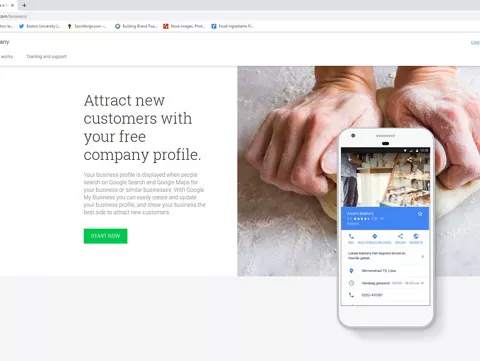
This matters because trust is visual as well as verbal. A website may state that a practice is modern and patient-focused, but Place content allows patients to see it. A Google Business Profile may show hours and location, but strong photos, services, posts, reviews, and booking links can turn local discovery into action. The youTooth article on Google Business emphasizes that a detailed online presence functions like a digital business card and can support local discoverability, reviews, photos, services, posts, insights, and appointment links [9].
For implant dentistry, Place content should be more than a clinic tour. It should show how the environment supports confidence. The imaging room is not just equipment; it represents planning. The consultation room is not just furniture; it represents explanation. The team photo is not just a social post; it represents the people who will guide the patient.
Patient questions this P answers
Where will I be treated? What does the clinic look like? Who will welcome me? Is the practice modern, clean, and professional? Can I book easily?
Search and answer-engine relevance
This P maps to local-intent queries such as “Dental implant dentist near me,” “Implant clinic in [city],” “Dental implant consultation,” and “Best dental implant practice near me.”
Premium content direction
Use practice tour videos, Google Business Profile optimization, team introductions, first-visit walk-throughs, and appointment-link guidance.
7. PHUN: Humanize Expertise Without Losing Premium Trust
Phun is the emotional signature of the model.
The spelling is intentional. It signals that this P is not about becoming silly, gimmicky, or unserious. It is about adding warmth, humanity, and memorability to a clinical environment that may otherwise feel intimidating.
Patients choose expertise, but they also choose people. They want to know whether the team is kind, whether the dentist listens, whether the atmosphere feels human, and whether the practice culture is one they can trust. A technically excellent practice that appears cold or inaccessible online may lose patients who are looking for reassurance.
Phun content shows the human side of clinical excellence. It may include team moments, behind-the-scenes rituals, tasteful celebrations, patient milestones with appropriate consent, myth-busting videos, or light but respectful content that makes the practice feel approachable.
This does not mean sacrificing premium positioning. In fact, premium brands often become more trusted when they reveal controlled moments of humanity. The key is discipline. Phun should never undermine clinical seriousness. It should make expertise feel accessible.
The youTooth Instagram article highlights the importance of relationship building, employee posts, fun posts, educational content, and before-and-after content in building familiarity and trust [8]. Phun brings these ideas into the implant patient journey by making the practice feel like a team of real people, not just a service provider.
Patient questions this P answers
Will I feel comfortable here? Are these people kind? Does the team seem approachable? Can I imagine myself as a patient here?
Search and answer-engine relevance
This P is less about direct search volume and more about conversion. It supports brand recall, social engagement, profile visits, story replies, and emotional trust signals.
Premium content direction
Use polished but authentic team content, behind-the-scenes moments, question-led short videos, and warm practice culture storytelling.
The 7P model as a practice growth system
The power of the 7P model is not that it gives practices seven topics. Its power is that it gives practices a way to organize the patient journey.
A patient who worries about pain needs reassurance. A patient comparing quotes needs value clarity. A patient unsure about treatment needs procedure explanation. A patient imagining life after treatment needs performance context. A patient evaluating quality needs product confidence. A patient deciding where to go needs place signals. A patient choosing people needs Phun.
Together, these seven dimensions create a more complete digital pre-consultation experience.
This is why the 7P model is designed to become a standard in dental practice marketing. It gives dental teams, agencies, educators, and industry partners a shared language for patient-centric communication. Instead of asking, “What should we post this week?”, practices can ask, “Which patient question are we answering, and which P does it belong to?”
That question changes everything.
The 7Ps turn marketing from a posting activity into a patient-confidence system.
How to use the 7Ps across the digital ecosystem
The 7P model should not live only on social media. It should connect the entire digital presence of an implant-focused practice.
On the practice website, the 7Ps can become the structure for an implant landing page: pain and anxiety, cost and value, procedure steps, expected outcomes, implant system quality, clinic environment, and team trust.
On Google Business Profile, the model can guide services, photos, posts, Q&A, review response themes, and appointment links. This connects directly with the youTooth guidance on strengthening local online presence through Google Business features [9].
On Instagram, the model can organize reels, stories, carousels, highlights, pinned posts, and profile messaging. This connects directly with the youTooth article on Instagram for dentists, which explains how dental practices can use Instagram to showcase the practice, build trust, share educational content, and move people from the profile toward the dental chair [8].
On newsletters, the model can guide a seven-part patient education sequence. Each email can answer one major decision question.
On long-form articles and video, the model can help build search and AI authority by creating deep, structured, patient-friendly content that answer engines can understand.
Compliance, ethics, and responsible patient communication
Because implant dentistry is healthcare, the 7P model must be applied responsibly.
All patient-facing content should follow local regulations, professional advertising rules, privacy requirements, and product claim guidance. Practices should use documented patient consent for identifiable images, videos, testimonials, and before-and-after content. They should avoid universal promises, guaranteed outcomes, unsubstantiated superiority claims, and individualized medical advice in public comment threads or direct messages.
Language such as “depending on your individual situation,” “when clinically appropriate,” “after a professional assessment,” and “individual results may vary” can help maintain accuracy and credibility. Educational content should be reviewed by a clinician or qualified reviewer before publication.
This responsible posture is not a limitation. It is part of premium trust.
Conclusion: The future belongs to “Confidence to Conversion” excellence
The dental implant patient journey has changed. Patients are researching earlier, comparing more sources, asking more detailed questions, and forming impressions before they ever contact a practice.
At the same time, digital content has become noisier. Implant-related posts are abundant, but educational value is inconsistent. This creates a decisive opportunity for practices that can communicate with clarity, empathy, structure, and scientific credibility.
The 7P Model of the Dental Patient Education Journey was created for that opportunity.
It gives dental professionals a memorable, scalable, and patient-first framework for answering the questions that shape implant decisions. It connects clinical expertise with search behavior. It supports SEO, AEO, and GEO. It works across social media, websites, blogs, newsletters, Google Business Profiles, and long-form education.
Most importantly, it gives the profession a shared language for modern implant communication.
Pain. Price. Procedure. Performance. Product. Place. Phun.
Seven questions. Seven trust signals. Seven ways to make clinical excellence visible.
The future of implant dentistry is not only clinical excellence. It is communicated excellence.
And the 7Ps are how practices can begin.
Key takeaways
- Dental implant decisions are no longer made only in clinics – they are shaped by digital experiences, education, and trust signals beforehand.
- The 7P Model (Pain, Price, Procedure, Performance, Product, Place, Phun) provides a clear, patient-centric structure for effective communication.
- Practices that explain better – not just promote more – build stronger trust and convert more patients in the modern, AI-driven landscape.
Continue learning on youTooth

Copyright and concept attribution note
The 7P Model of the Dental Patient Education Journey was developed and refined by Dominik Schneider since 2013 and updated on youTooth in 2026.
The concept is based on more than ten years of industry experience, Google Search data analysis, Straumann internal patient journey research, and scientific literature on dental social media, and patient behavior.