Oral Health Insights 2
Why oral health deserves greater recognition as part of global health, equity, and societal well-being.
July 2026 · Oral Health Insights · Second edition / 2026
Abstract
Oral health affects billions of people and represents one of the most widespread health challenges globally. Yet in many regions, it is understandably overshadowed by urgent crises such as poverty, hunger, conflict, and natural disasters.
In such contexts, oral health may appear secondary or less vital than immediate threats to survival. However, evidence shows that oral diseases can have profound effects on general health, social participation, and economic stability. They share major risk factors with other noncommunicable diseases and can worsen existing vulnerabilities.
This article explores why poor oral health should be acknowledged as a significant global public-health issue, even in complex humanitarian and socioeconomic environments. It suggests that a broader shift in global perception, one that recognizes oral health as essential to overall health, equity, and societal well-being, may support more sustainable, long-term approaches that benefit individuals and communities.
In this article
- Poor oral health should be globally acknowledged as a public-health problem
- A global challenge overshadowed by immediate needs
- The deep connection between oral health and overall health
- The hidden economic and social burden of poor oral health
- The burden behind the numbers
- Why broader recognition matters
- A modest call for reflection
- References


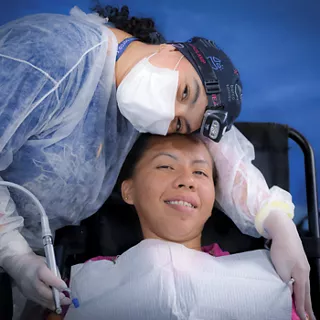
Lack of access and awareness can have lasting consequences.
Poor oral health should be globally acknowledged as a public-health problem
Perceptions of oral health very much lie in the eye of the beholder.
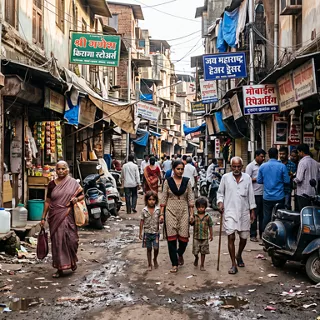
In many regions around the world, daily life is shaped by urgent and immediate challenges. People face poverty, hunger, conflict, displacement, or the aftermath of natural disasters. These crises understandably demand attention and resources.
Against such a backdrop, oral health may appear to be a secondary concern, something that can be postponed until “more important” needs have been addressed. This perception is both relatable and deeply human.
Yet it can unintentionally overshadow the significant impact that oral diseases have on overall well-being, quality of life, and broader societal outcomes.
Recognizing oral health as part of public health does not diminish the urgency of other crises. It broadens our understanding of how health, dignity, and opportunity are connected.
A global challenge overshadowed by immediate needs
Oral diseases affect more than 3.5 billion people, making them some of the most common health conditions worldwide (Kassebaum et al., 2022).
Despite their prevalence, they rarely receive the same attention as other global health issues. The lack of perceived urgency, combined with the limited visibility of early symptoms, contributes to the belief that oral health is not vital.
However, when oral diseases are left untreated, they can lead to:
- Pain and infection
- Difficulty eating
- Poor sleep
- Reduced self-esteem
- Limited social participation
- Reduced school or work performance
In severe cases, oral diseases can escalate into broader health problems and place additional strain on families and health systems already burdened by socioeconomic hardship (World Health Organization, 2022).
Recognizing these realities does not diminish other urgent needs. It enriches our understanding of how interconnected health truly is (Peres et al., 2019).
At a glance
- More than 3.5 billion people are affected by oral diseases worldwide.
- Almost half of the global populationlives with one or more oral conditions.
- The greatest burden is often carried by people facing social and economic disadvantage.


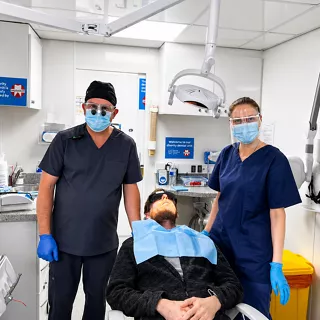
Better access to preventive and restorative care is possible.
The deep connection between oral health and overall health
Scientific research increasingly emphasizes that oral health is inseparable from general health.
The mouth plays a central role in nutrition, communication, and daily functioning. Oral diseases also share important risk factors with major noncommunicable diseases.
These include:
- High sugar consumption
- Tobacco use
- Harmful alcohol consumption
- Stress
- Limited access to preventive care
- Underlying social and commercial determinants
These factors contribute to both oral and systemic diseases (World Health Organization, 2022).
Periodontal disease, for example, has been linked to complications associated with diabetes and an elevated risk of cardiovascular events (Tonetti et al., 2017).
Understanding these connections helps demonstrate that oral health is not an isolated issue. It is part of the broader health landscape.
In communities facing multiple vulnerabilities, maintaining oral health can play a stabilizing role in nutrition, communication, confidence, social participation, and overall well-being.
Oral health is not simply about teeth. It influences how people eat, communicate, learn, work, and participate in society.
The hidden economic and social burden of poor oral health
Oral diseases also carry a substantial economic cost.
Global estimates suggest that dental treatment costs exceed USD 350 billion annually, while indirect productivity losses add approximately another USD 180 billion (Peres et al., 2019).
While these figures illustrate the system-level burden, the personal consequences are often more telling:
- Children missing school
- Adults struggling to work
- Families facing expenses they cannot afford
- People withdrawing from social situations
- Treatment being delayed until pain becomes severe
For many households, poor oral health reinforces existing inequalities.
Pain, visible dental problems, or tooth loss may affect confidence and social participation. People living through poverty or instability may have even fewer opportunities to receive timely preventive or restorative care.
Without access to appropriate care, oral diseases may persist or worsen, seriously affecting quality of life and well-being over time (Peres et al., 2019; World Health Organization, n.d.). The WHO also notes that oral disease can contribute to social isolation, missed school or work, and greater financial pressure on individuals and families.


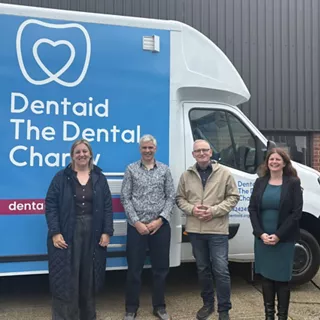
Prevention starts with knowledge and everyday habits.
The burden behind the numbers
Treatment costs
Families may delay care because essential treatment is unaffordable or not included in public-health coverage.
Education
Pain and poor sleep can affect concentration, attendance, and educational participation.
Employment
Oral health problems can reduce productivity and contribute to missed working days.
Social participation
Visible dental problems, pain, and tooth loss may affect confidence and lead people to withdraw from social situations.
Why broader recognition matters
Raising awareness of oral health as a public-health issue is not about competing with other priorities.
Rather, it supports a more holistic understanding of health challenges. Oral health plays a role in nutrition, communication, social belonging, education, and employment, areas that are already central to humanitarian and development efforts (World Health Organization, 2022).
Broader recognition may encourage several important developments.
Integrating oral health into primary health and prevention programs
Oral health is frequently separated from general healthcare. Better integration could support prevention, earlier identification of disease, and more continuous care.
Focusing on shared risk factors
Oral diseases and other noncommunicable diseases share several important risk factors, including sugar consumption, tobacco use, and harmful alcohol consumption. Addressing these risks can benefit both oral and general health.
Strengthening community-based care
Community-based models can bring prevention, education, and essential services closer to people who face geographic, social, or financial barriers.
Improving access to affordable, essential treatment
Preventive and basic oral healthcare should not depend solely on a person’s income or place of residence.
Addressing inequalities that limit long-term well-being
Oral diseases disproportionately affect vulnerable and disadvantaged populations. Greater recognition can help direct attention and resources toward people who currently face the greatest barriers to care.
Rather than prescribing one universal solution, this approach invites reflection on how oral health can meaningfully complement existing health and social strategies.


No one should have to wait in pain for basic oral care.
A modest call for reflection
Organizations and foundations working in health, including the Straumann Group Foundation, emphasize the value of understanding oral health as part of a wider set of factors that contribute to resilience and well-being.
Considering oral health within broader health strategies may support more inclusive and sustainable outcomes. This can include prevention, education, affordable essential care, local capacity building, and closer integration with community and primary-health systems.
In this spirit, it may be helpful to consider a global shift in perception, one that recognizes oral health as essential to overall health, equity, and societal well-being.
Such a shift would not diminish the urgency of other crises.
Instead, it may help build stronger and more holistic approaches that support people in all aspects of their lives.
Oral health should not compete with other global priorities. It should become a natural part of how we understand health, resilience, and human well-being.
About the authors

Director and Head of the Straumann Group Foundation

Deputy Director Straumann Group Foundation
References
Kassebaum, N. J., Smith, A. G. C., Bernabé, E., Fleming, T. D., & Reynolds, A. E. (2022). Global burden of oral conditions: 1990–2019. Journal of Dental Research, 101(3), 273–281.
Peres, M. A., Macpherson, L. M. D., Weyant, R. J., et al. (2019). Oral diseases: A global public health challenge. The Lancet, 394(10194), 249–260.
Tonetti, M. S., Jepsen, S., Jin, L., & Otomo-Corgel, J. (2017). Periodontal diseases and systemic health: Emerging consensus. Journal of Clinical Periodontology, 44(12), 125–131.
World Health Organization. (2022). Global oral health status report: Towards universal health coverage for oral health by 2030. World Health Organization.
World Health Organization. (n.d.). Oral health. Retrieved July 17, 2026.