



 International – English

The Board of Directors of Straumann Holding AG comprises seven non-executive members. Except for Wolfgang Becker, who served as the Group’s Head of EMEA until the end of June 2024, none of the other members has been a member of the Executive Management of any of the Group’s companies during the preceding three financial years or had any significant business connections with Straumann Holding AG or any of its subsidiaries in 2025.

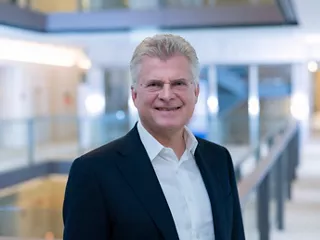
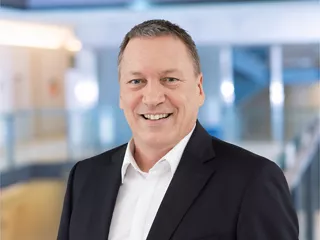

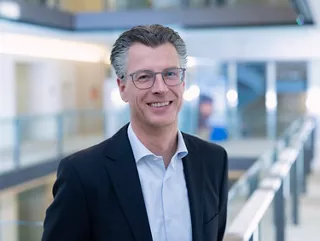

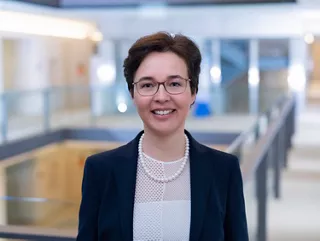
Independence, Gender diversity and competences of Board members
The Board strongly believes that its independence is important and in the best interest of all stakeholders. Having Board members with industry experience who are familiar with stakeholder engagement is an important ingredient for Straumann Group’s success. Being a predictable operator and a reliable business partner is key.
The Human Resources & Compensation Committee (HRCC) reviews the independence of the Board members. The evaluation also takes into account the interests of the anchor shareholders.
The Straumann Group follows the Swiss Code of Best Practice for Corporate Governance as published by economiesuisse. A member of the Board of Directors is therefore considered independent if the member
- is not, and has not been employed as an Executive Management Board member by the Group or any of its subsidiaries in the prior three years;
- is not, and has not been an employee or affiliated with the elected external auditor in the prior three years; and
- does not maintain a material direct or indirect business relationship with the Group or any of its subsidiaries.
The Board aims for a healthy average tenure by having a mix of long-term and newer Board members and does not impose an arbitrary end to membership after a certain length of service. The age of a Board member or length of tenure are not criteria for independence. Furthermore, significant shareholder status is also not considered a criterion for independence. Based on these criteria 100% of the Board members are considered independent.
Diversity and representation are vital for the Straumann Group’s success. The Board of Directors reflects this commitment by embodying the diversity of our workforce and the global communities we serve. Currently, 43% of the Board members are women, demonstrating our efforts toward gender balance. While the Board carries the heritage of Swiss excellence, its members bring a rich blend of international backgrounds and professional experiences, reflecting the dynamic and inclusive spirit of the Group.
The competencies of our Board members are well-balanced and strategically aligned with our company’s core business. Each member brings a unique set of skills and experiences that collectively ensure comprehensive oversight and guidance. This diverse expertise spans key areas such as finance, operations, digitalization technology and industry-specific knowledge, enabling the Board to make informed decisions that drive our business forward. The individual competences are listed in the table below. Dr Andreas Meier Gadient, Chief Legal Officer and Chief Compliance Officer of the Group, adds further profound legal and compliance know-how to the Board in his function as Corporate Secretary.
Straumann Board of Directors – Memberships on other boards
Petra Rumpf
| Listed companies | Private companies | Not-for-Profit Organizations | Location | Function |
|---|---|---|---|---|
| V-Zug Holding | CH | Board member | ||
| Vimian Group | SE | Board member | ||
| SHL-Medical | CH | Board member (Chair Audit Committee) |
||
| Swiss American Chamber of Commerce | CH | Advisory Board member |
Stefan Meister
| Listed companies | Private companies | Not-for-Profit Organizations | Location | Function |
|---|---|---|---|---|
| atwork corporate AG | CH | Chair | ||
| Grand Hotel Les Trois Rois | CH | Chair | ||
| Silverpine AG | CH | Board member | ||
| Center for Leadership and Value in Society, University of St. Gallen | CH | Advisory Board member | ||
| Schweizer Dialog, University of St. Gallen | CH | Board member |
Xiaoqun Clever-Steg
| Listed companies | Private companies | Not-for-Profit Organizations | Location | Function |
|---|---|---|---|---|
| BHP Group Limited | AU | Board member | ||
| Amadeus IT Group | ES | Board member | ||
| Infineon Technologies | DE | Supervisory Board member | ||
| Nuremberg Institute for Market Decisions e.V | DE | Advisory Board member |
Sébastien Schatzmann
| Listed companies | Private companies | Not-for-Profit Organizations | Location | Function |
|---|---|---|---|---|
Wynag AG |
CH | Board member | ||
Belagswerk Boningen AG |
CH | Board member | ||
Kieswerk Boningen AG |
CH | Board member | ||
Wyss Kies und Beton AG |
CH | Board member | ||
Kieswerk Gungzen AG |
CH | Board member | ||
Aare-Kies Holding AG |
CH | Board member | ||
SHMN Holding AG |
CH | Board member | ||
Toplog AG |
CH | Board member | ||
Waid Holding AG |
CH | Board member | ||
Kies Neuendorf AG |
CH | Chair | ||
| Schatzmann Holding AG | CH | Board member |
Regula Wallimann
| Listed companies | Private companies | Not-for-Profit Organizations | Location | Function |
|---|---|---|---|---|
| Adecco Group AG | CH | Board member (Chair Audit Committee) |
||
| Clariant AG | CH | Board member (Chair Audit Committee) |
||
| Radar Topco S.à.r.l, (including Swissport Group, Opfikon, Switzerland) | LU | Board member (Chair Audit Committee) | ||
| University of St. Gallen, Institute of Accounting, Control and Auditing (ACA-HSG) | CH | Advisory Board member |
Board of Director – competence matrix
| P. Rumpf | S. Meister | W. Becker | X. Clever-Steg | O. Filliol | S. Schatzmann | R. Wallimann | |
|---|---|---|---|---|---|---|---|
| Executive experience | ● | ● | ● | ● | ● | ● | |
| Finance, audit, risk management | ● | ● | ● | ● | ● | ||
| Compliance, regulatory, legal | ● | ● | |||||
| Capital markets, M&A | ● | ● | ● | ● | ● | ● | ● |
| Core industry experience (dental) | ● | ● | |||||
| Transferable expertise in related industries | ● | ● | ● | ● | ● | ● | |
| International business experience | ● | ● | ● | ● | ● | ● | |
| Digitalization, technology | ● | ● | ● | ● | |||
| Strategy, business transformation | ● | ● | ● | ● | ● | ● | |
| HR, compensation | ● | ● | ● | ● | ● | ||
| Board governance | ● | ● | ● | ● | ● | ● | |
| Sustainability | ● | ● | ● | ● |
Board and committee meetings 2025
| Board Meetings | Audit & Risk Committee | Human Resources & Compensation Committee |
Technology & Innovation Committee |
Strategy/Culture offsite with the EMB | ||||
|---|---|---|---|---|---|---|---|---|
| Board member | Oridinary | Bring down calls | Oridinary | Extraordinary | Ordinary | Extraordinary | ||
| P. Rumpf | 6 | 3 | 5 | 1 | 5 | 1 | 2 | 1 |
| M. Gadola | 6 | 1 | 5 | 1 | 5 | 1 | ||
| X. Clever-Steg | 6 | 2 | 2 | 1 | ||||
| Dr. O. Filliol | 6 | 2 | 5 | 2 | 1 | |||
| S. Meister | 5 | 2 | 5 | 1 | ||||
| Dr. h.c. T. Straumann | 6 | 3 | 2 | 1 | ||||
| R. Wallimann | 6 | 3 | 5 | 1 | 5 | 1 | ||
| Meetings held in 2025 | 6 | 3 | 5 | 1 | 5 | 1 | 2 | 1 |
| Average length of the meetings (excluding extensive pre-meeting preparations and post-meeting follow-up activities) | 7 hours 20 min | 30 min | 4 hours | 1 hour | 3 hours | 1 hour | 3 hours | 2 days |
Permitted mandates outside Straumann Group
(pursuant to art. 626 II CO)
Art. 4.4 of Straumann’s Articles of Association states that no member of the Board may perform more than 15 additional mandates in comparable functions in other companies with an economic purpose, of which no more than five may be in listed companies.
The following are exempt from these restrictions:
- Mandates in enterprises that are controlled by the Group
- Mandates in enterprises that are performed at the instruction of the Group
- Mandates in associations, organizations, foundations, trusts and employee pension funds; no member of the Board of Directors may perform more than ten such mandates.
Mandates in several legal entities under common control or under the same economic authority are deemed as one mandate.
Working methods and allocation of tasks
The full Board of Directors convenes for one-day meetings at least five times a year and meets more frequently when required by the business.
The CEO, the CFO and the Corporate Secretary regularly attend Board meetings. Other members of the Executive Management Board (EMB) participate in discussions on agenda items relevant to their responsibilities. Where specific expertise is required, the Board seeks advice from external specialists in accordance with good governance practice.
Beyond formal meeting activity, the Board participates in workshops, conferences, trade fairs, joint travel and site visits to deepen its understanding of the operating environment and maintain direct contact with customers and other stakeholders. These activities support the Board in fulfilling its supervisory and strategic responsibilities. Additionally, the Board held a two-day Culture Offsite Meeting together with the Executive Management Board (EMB) to further strengthen shared values, alignment and collaboration.
Each year the Board runs a survey regarding EMB and Board Effectiveness. The survey contains around 30 questions covering diverse aspects of leadership, strategy, culture and governance. Our latest survey had 100% participation of our EMB and Board of Directors and sustained strong overall effectiveness scores, as measured by two key questions on governance and collaboration. As in the recent years we continue to drive our high-performance player-learner culture through collaboration and effective communication also on this level. In addition, the Board provides mentoring to EMB members with the objective of fostering leadership development and supporting sound decision-making.
The Board has a quorum when a majority of its members are present, except in cases requiring public notarization. Resolutions are adopted by a majority of the votes cast. In the event of a tie, the Chair has the deciding vote.
The Board is responsible for the overall strategic direction of the Group, the supervision of the EMB, financial oversight, and the definition of risk tolerance. It reviews the company’s objectives, evaluates opportunities and risks, and appoints or dismisses the CEO and members of the EMB. The responsibilities of the Board, Chair and Vice Chair are defined in sections 4.2 and 4.3 of the Organizational Regulations.
Committees of the Board of Directors
The Board of Directors has an Audit & Risk Committee, a Human Resources & Compensation Committee and a Strategy & Innovation Committee, each consisting of no fewer than three Board members with relevant background and experience. The Board of Directors may establish further committees or appoint individual members for specific tasks.
The members of the Human Resources & Compensation Committee are elected by the Annual General Meeting for a term of one year. The Human Resources & Compensation Committee constitutes itself. In the event of a vacancy the Board of Directors appoints the replacement from among its own members for the remaining term of office.
The members and the Chairs of both the Audit & Risk Committee and the Strategy & Innovation Committee are appointed by the Board of Directors.
Audit & Risk Committee
Members: Regula Wallimann (Chair), Stefan Meister, Sébastien Schatzmann
Human Resources & Compensation Committee
Members: Stefan Meister (Chair), Regula Wallimann, Olivier Filliol
Strategy & Innovation Committee
Members: Wolfgang Becker (Chair), Stefan Meister, Olivier Filliol
The detailed tasks of each of the committees, as well as the indication of the decision powers of such committees and tasks, are listed in their respective charters, which are attached to the Organizational Regulations.
Elections and Term of Office
The members of the Board, the Chair and the members of the Human Resources & Compensation Committee are all elected individually by the Annual General Meeting (AGM) for a term of one year. Re-election is permitted until the age of 70.
If the position of Chair or a position in the Human Resources & Compensation Committee becomes vacant, the Board appoints a replacement from among its members for the remaining term of office.
Assignment of responsibilities to the Executive Management Board
The Board of Directors has delegated responsibility for the operational management and sustainable development of the Group to the Chief Executive Officer (CEO) and the other members of the EMB. For their specific responsibilities, see the chart on p. 159 of Annual Report and section 5 of the Organizational Regulations. The Board may revoke delegated duties at any time.
The Board of Directors has not delegated any management tasks to companies or persons outside the Group.
Information and Control Instruments vis-à-vis the executive management
Management Information System
The Management Information System (MIS) is fundamental to the Straumann Group’s commitment to transparency, effective governance and strategic oversight. Through a well-integrated MIS framework encompassing management, business and financial reporting, key data is delivered to the Executive Management Board monthly and, additionally, provided to the Board of Directors as both monthly summaries and comprehensive quarterly reports. This structured information flow enables informed, agile decision-making at all levels.
Central to our MIS is the SAP Enterprise Resource Planning (ERP) system, which processes over 90% of the Group’s business transactions across fully consolidated entities. This ERP system forms the foundation of our management infrastructure, seamlessly connecting our headquarters with key subsidiaries and production sites. In 2026, the system will be expanded with several SAP deployments. These will include strategic rollouts at Straumann Ceramic in Germany, a company specializing in ceramic injection molding (CIM) for dental implant components; Promaton, a Netherlands-based provider of AI solutions for dental applications; and Design Services Poland, which focuses on planning and developing 3D orthodontic treatment animations. This ERP expansion will enhance operational efficiency, reduce redundancies and strengthen internal controls, effectively minimizing risks of error and fraud.
The SAP system also offers senior management real-time visibility into localized processes and associated financials, providing powerful support for data-driven decision-making and effective monitoring across the Group’s global operations.
The Board of Directors works closely with Executive Management in overseeing the MIS, maintaining close alignment through regular workshops, site visits, joint travel and participation in staff meetings. This approach fosters transparency and provides the Board with a firsthand understanding of the Group’s operational dynamics.
Internal Control System
The Group’s internal control system (ICS) is designed to ensure that key risks across all core business processes are adequately controlled in line with Straumann Group’s risk appetite. The ICS undergoes a constant improvement cycle to address new and emerging risks to achieve the desired level of control in terms of efficiency and effectiveness.
The company’s approach is to ensure that internal controls are accurate and timely, robust and receive appropriate management attention in each respect. To achieve this, a Group-wide control framework has been implemented that is applicable to all subsidiaries that are controlled by Straumann Group and reviewed annually.
Therefore, each entity (sales affiliate, production site or global function) has a designated General Manager and Finance Head (or equivalent) who are ultimately accountable for the adherence to the ICS. Clear benefits of the ICS include enhanced segregation of duties, increased control consciousness and higher awareness of potential risks and their consequences.
The ICS program is coordinated by the Head of Internal Control System, who meets with the external auditors on a regular basis to discuss the status of internal controls.
In line with art. 728a para. 1 item 3 CO, the existence of the ICS is evaluated annually by the external auditors. Also, Internal Audit assesses the implementation of and adherence to the controls framework for selected subsidiaries or assesses the controls’ effectiveness for selected processes in line with the approved audit plan.
Internal Audit
The role of the Group’s internal audit function is to provide independent assurance to the Board of Directors that the key risks of the organization are under control and to support management in ensuring compliance, operational efficiency and control effectiveness across the Group. When specialized expertise is required, the internal audit operates in co-sourcing model with external partners.
In 2025, five internal audits were performed according to the audit program approved by the Audit & Risk Committee of the Board of Directors.
Corporate Risk Management
The Board of Directors is responsible for the overall supervision of risk management and uses the internal audit function to this end. The Board has delegated the task of risk management to the Chief Risk Officer (CRO), who also holds the position of CFO. Through its Audit & Risk Committee, the Board assesses and discusses risks on a regular basis in consultation with the CRO and/or the relevant members of senior management. More information about the risk management of the Group can be found here.